 |
 |
| Home | Software | Guitar Amps etc. | Publications | Secure | Contact |
| Main Amp Page | DSL Clean/Crunch Footswitch | DSL FX Loop Modification | DSL FX Loop Measurements |
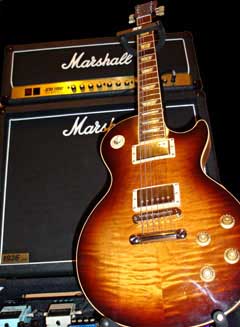
Guitar Amps / EffectsDSL 100 Clean/Crunch Footswitch update below!Whilst playing around with tube amps like the Marshall JCM2000 DSL 100 shown here, I came across a number of issues/gripes and wishes people have with amplifiers. No matter how good an amp is, commercial and design decisions often lead to compromises in the final product. I believe the Marshall DSL 50/100 series, whilst generally being great amps, suffer from some limitations. Modern high volume production amplifiers make heavy use of printed circuit boards. These dramatically speed up the build process and produce consistant results (assuming the components are kept the same between batches). Older amplifiers made use of hard wired circuits. Whilst they often look cumbersome, wire links were only generally as long as they needed to be and wires could cross each other as many times as was necessary. PCBs are often only printed single sided, this means that components are placed to ease circuit layout rather than in their optimum position. This can also lead to signal paths that are again less than optimum to provide a design that can be built easily. Such compromises cause the amplifiers to sound "different" and deviate from the vintage sounds people strive for. One problem introduced by the modern circuit layout is the FX loop problem descibed here. |
 |
|
DSL 50/100 Clean/Crunch Footswitch - Update (08/8/10)The DSL amplifiers are the best selling Marshall amplifieres of all time boasting 2 main channels, the classic gain (green) and the ultra gain (red). These channels can be selected by either the push button switch or a footswitch. Each channel then has two modes of operation, the green channel has Clean/Crunch modes whilst the ultra gain has Lead 1/2 modes. The clean/crunch channel gives some great sounds similar to more vintage Marshalls, however there is no easy way to switch between them other than using the button on the amp. More problematic however is the massive difference in volume between the two channels, this means that the clean/crunch selection is not easily made in a live situation. |
||
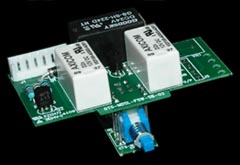
The DSL 50/100 Clean/Crunch Footswitch mod replaces the 4 pole switch used to select clean/crunch modes with a drop in relay assembly and jack socket. More importantly however, a dedicated 3rd relay on the board can be used in conjunction with an extra volume pot to allow complete independant control of both clean and crunch volumes - essentially making the DSL a 3 channel amp!
|
 |
|
Low Volume Marshall DSL FX Loop Problem and ModficationMany people complain about the effects loop (fx loop) on these amplifiers. Whilst some of the problems I believe are caused by losses in the pedals/fx units themselves I did find the amp sounded horrible with the loop on at low volumes - the sort of levels you might use at home to practice. Try this: Use a short piece of cable to loop the FX send and return jacks - this enables the FX loop but returns exactly what was sent from the loop. Select the red channel and turn the volume all the way to zero. Play your guitar - notice the trebly sound coming through even at zero volume? As you turn up the volume you bring in your normal amp sound but the tinny sound remains. I found that I didnt want to use the FX loop because of this. If you turn the amp up, you can hardly notice the effect and it sounds much better - but I just couldnt get on with the low volume sound at all. Eventually I found the cause and the fix to this problem, click here for an in depth explanation and cure. |
||
Marshall DSL 50 / 100 FX Loop InvestigationWhilst the modification above improves the transpareny at lower volumes, people say that the FX loop also affects the tone as the volume is turned up. To understand the problem some tests have been performed to compare the frequency response of the entire amplifier under different loop conditions. This is a work in progress investigation however results will be updated as they are available.
|
||